

When Plants Get Salty

HRI Research • March 13, 2020

While diseases are important in plant health, they are not responsible for every browning or plant death. Abiotic diseases can cause problems too. Things like drought, freezing temperatures, herbicide drift, dog urine, nutrient deficiencies – anything negatively impacting plant growth that isn’t caused by a living agent. That includes salt, the kind used for deicing purposes in the winter.
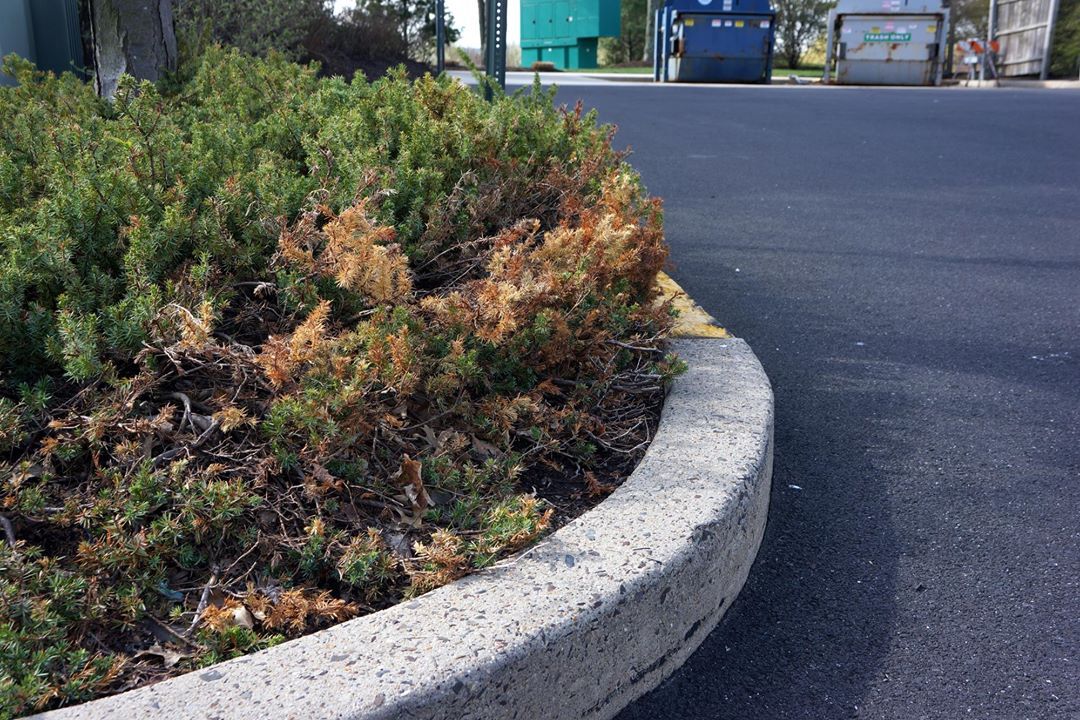
Most people know by now that rock salt can be harmful to pets - causing lethargy and vomiting if ingested and irritating little paws just by walking on treated surfaces. It also damages plants, and spring is the most common time of the year to see the effects; that’s when the telltale signs appear. Leaf or needle browning, bud death, and scorched-looking leaf margins are all typical. When you look at the whole plant, branch dieback on the side facing a road or sidewalk may be evident.

Some signs, though, are not apparent until summer, when deicing is but a faded memory. Summer is when fewer or smaller leaves than normal can be observed, and water stress becomes a concern. These symptoms occur more often in hot, dry years. The salts in the soil can absorb water, making it less available for the plant. Then roots dehydrate, and the damage may not be fully visible until summer.
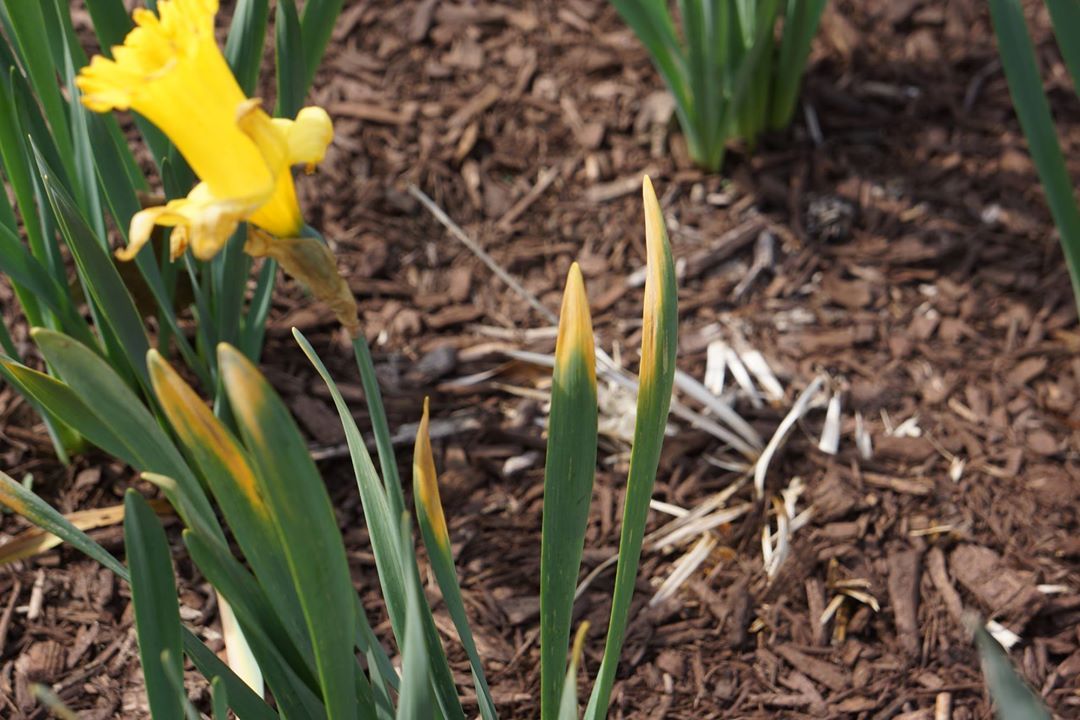
Plants are exposed to these salts through a variety of ways. Sometimes they are inadvertently applied directly onto plants, especially if located near a sidewalk or roadway. Other times, spray from passing cars lands on plants, and salt-laden snow can even get plowed or shoveled onto landscape plants. In these cases, rock salt desiccates bud scales, the protective layer around buds, leaving tender floral and leaf tissue exposed to the ravages of cold, winter winds. In milder winters, the impact may not be as pronounced. But in winters with a wicked polar vortex, don’t be surprised if damage is more apparent.

However, one of the more destructive introductions comes from salts dissolved in runoff water, creating the potential for salt accumulation in the soil. Chloride can accumulate at toxic levels in plants, leading to interference with chlorophyll production and ultimately a lea- burn appearance and dieback. Sodium and chloride together cause nutrient imbalances in soil. Roots will absorb sodium & chlorine instead of other, essential nutrients like phosphorous and potassium. This results in problems such as darkened, discolored leaves or yellowing between leaf veins.

If you are concerned about this kind of damage, changing the type of salt you use may make a big difference. All salts are not created equal. Most just happen to be rock salt, which is made up of sodium chloride and is the most damaging to plants. Other, safer options include magnesium chloride, calcium chloride, and calcium magnesium acetate. Salts without sodium are preferable around plants (and pets!) and important tools for preventing future damage.

If you can’t control the type of deicing agent used, consider changing your landscape. Some plants are more tolerant of salts than others, such as juniper, Mugo pine, white spruce, paper birch, and sumac. These would be better suited for locations near sites treated with salts in winter.

The extent of damage depends on the plant type, movement of runoff, availability of fresh water, and the type of salt used. There are many kinds of deicing agents available for use on roads, driveways, and sidewalks. Chemistry matters in this case.

In addition to rock salt,

  • Salts applied late winter more damaging than early apps (allow more opportunity for salts to leach away before growth in spring
  • Volume of fresh water applied to soils impact amount of salts leached away, rainfall washes salt from leaves

Management: reduce salt use

  • Combine salt with sand, sawdust, or cinders that can provide grittiness for traction
  • Use calcium chloride, magnesium chloride, potassium chloride (more expensive)
  • Target apps away from plants & beds
  • Flow of runoff should be considered
  • Protect plants with physical barrier – burlap, plastic, wood
  • In times of warfare, used to destroy soils

There are many kinds of different salts available in winter for use on roads, driveways, and sidewalks to manage snow and ice and make surfaces safer for driving and walking.

Dr. Jill Calabro
Research & Science Director

Horticultural Research Institute & AmericanHort

admin's blog

Share This Post

Blurry green foliage filling the frame
By Jennifer Gray May 28, 2026
Soilless Substrate Science (S3) is a national transdisciplinary collaboration developed to support growers as we advance to the next generation of substrates. Our team is leading North American efforts to develop new substrate materials and techniques, and working with growers to support implementation, as we support the global transition to substrates that go Beyond Peat. In this webinar, Dr. Jeb Fields will discuss the S3 team efforts surrounding identification of new substrate materials, processing and development, and grower support. We will explore wood fiber processing, sugarcane bagasse substrate development, stabilization of organic fibers, databasing substrate materials, and opportunities for growers to get involved. Overall, attendees will learn about US efforts to develop domestically-sourced substrates and advance substrate science as we move towards the next generation of substrate science. Our Speaker Dr. Jeb Fields is a production horticulturist who works with growers in Florida and throughout the country to support more effective and efficient production practices through his environmental nursery research program. Jeb’s primary interests include growing media & substrate science, irrigation & fertilizer management, whole plant-water relations and plant abiotic stress physiology. Jeb is an internationally recognized substrate scientist, the leader of the Beyond Peat project through the USDA Specialty Crops Research Initiative, and the national S3 (Soilless Substrate Science) team which pursues advancements of the global substrate industry and development sustainable substrate materials and practices, including substrate stratification. Jeb is the editor for Nursery & Landscape Insider, a biweekly e-newsletter from Ball Publishing, that reaches over 32,000 stakeholders worldwide. For his efforts, he has been recognized with numerous awards, honors, and leadership positions. Prior to joining UF, Jeb was a professor and research station director with the LSU AgCenter. Jeb studied at UF for his B.S., NC State University for his M.S., and Virginia Tech for his Ph.D. – with all degrees focusing on production horticulture.
A soft-focus background of varying shades of green, suggesting grass, foliage, or a forest landscape.
By Jennifer Gray April 9, 2026
This webinar dives into the problem of rose rosette virus. Shrub roses consist of multiple canes attached to a root system and produce beautiful spring growth in the form of new flowering stems and branches. Experts will provide an overview of how rose rosette virus first attacks flowering growth and can move throughout the stem. At the same time rosette symptoms appear in mature distinct stems of a plant and may be absent from others. The research delves into understanding how the vascular system connects the flowering stems and above ground canes. The research is to understand how virus movement between adjacent stems and only appears to cause disease in a few but not all canes of the same plant. This research is important to explore potential management approaches to safeguard rose.
By Jennifer Gray March 24, 2026
The horticulture industry continues to change as new technologies, production practices, and consumer expectations reshape the marketplace. Research plays an essential role in helping growers, landscapers, and retailers adapt and succeed. That’s exactly where the Horticultural Research Institute (HRI) enters the chat. Every year, HRI selects and funds research projects that advance horticulture. In 2026, HRI is investing more than $560,000 in 18 research projects that target challenges across the horticultural supply chain, including plant production, pest and disease management, landscape plant performance, and consumer insights. “What makes HRI research so valuable is that it focuses on real challenges the industry is facing right now,” said Mark Yelanich, HRI President and Research Director at Metrolina Greenhouses. “The 2026 HRI-funded projects were selected because they develop knowledge, processes, or tools that businesses can actually use.” HRI’s four strategic research priorities guide funding decisions, focusing on quantifying plant benefits, creating innovative solutions, gathering consumer insights, and producing practical solutions to industry challenges. The 2026 projects reflect these priorities across the horticulture supply chain.
Show More