
Andrea Avila (Smith Gardens – OR) oversees the company’s largest facility, producing over half its annual volume. With a background in corporate finance and production operations, she brings global perspective and strong leadership rooted in lean practices and people development. Originally from Costa Rica, Andrea has more than two decades of experience in horticulture across international markets and is also a dedicated board member of the Oregon Association of Nurseries.
Meet the HRI Leadership Academy Class of 2026: Ten Industry Leaders Shaping the Future of Horticulture
Jennifer Gray • July 23, 2025
COLUMBUS, OH – July 22, 2025 – The Horticultural Research Institute (HRI) and AmericanHort are proud to announce the HRI Leadership Academy Class of 2026, a cohort of accomplished professionals from across the green industry who are poised to take their leadership to the next level. These individuals, representing various industry segments and career paths, were selected for their commitment to horticulture and their desire to help shape the industry's future.
The HRI Leadership Academy is a one-year advanced leadership program designed for experienced horticulture professionals looking to elevate their influence and expand their strategic thinking and business skills. Built around in-person classes, peer collaboration, and mentorship, this program prepares leaders to confidently navigate business challenges, drive innovation, and spark positive change in their businesses, the industry, and their communities.
Introducing the Class of 2026:


Fred Higginbotham III (Millcreek Gardens – OH) started as an intern and rose to a key leadership role managing growing operations. Fred is known for his steady presence, strategic thinking, and deep commitment to mentoring and workforce development. With over two decades of industry experience, he is deeply invested in sustainability, quality control, and helping his team grow professionally.

Tom Hughes (Hughes Nursery & Landscaping – IA) is a fourth-generation owner and president of his family business. With over 25 years of experience, Tom blends operational excellence with community stewardship and a legacy mindset. He is active in civic leadership, has served on various nonprofit boards, and is a former chairman of the AmericanHort board. Tom is committed to supporting young industry professionals and strengthening family business values within the industry.

Colin Jones (Manor View Farm – MD) has built his career at the intersection of nursery production and landscape operations, giving him a well-rounded view of the challenges and opportunities facing green industry businesses. He focuses on improving internal systems, fostering team development, and driving business growth through efficiency. Colin also serves on the board of the Landscape Contractors Association, where he advocates for professional standards and continued industry advancement.

Kaitlyn Larson (Larson’s Garden Center & Landscaping – CT) leads her family’s century-old business and has expanded both its retail and design/build operations. She is a champion for customer experience, team development, and peer collaboration. Kaitlyn co-founded the Connecticut Garden Center Leadership Council and actively works to bring forward-thinking strategies into traditional retail spaces.
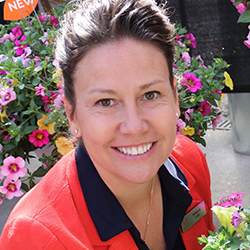
Rebecca Lusk (Vaughan’s Horticulture – IL) brings two decades of experience in floriculture sales and strategy. She’s known for her work with key retail accounts, her practical leadership style, and her commitment to advancing women in the industry. Rebecca previously founded Luxflora, a past initiative focused on women in horticulture, and she continues to focus on collaborative leadership and business growth.

Emily Mason (Syngenta Flowers – CA) is the Global Head of Marketing, with over 25 years of experience in product management, branding, and strategy. Her international career spans roles in Europe and Latin America, with a focus on innovation and inclusive leadership. Emily has held executive roles at multiple global firms and is recognized for bringing consumer insights and data-driven strategy into every facet of the horticulture value chain.

Hilliary Metzger (Home Nursery – IL) leads a multi-state sales team for one of the Midwest’s top nursery growers. She is focused on customer service, team culture, and supporting the next generation through FFA and educational outreach. Known for her collaborative, people-first approach, Hilliary works to build long-term relationships and to cultivate a strong internal culture.

Amanda Staehely (Columbia Nursery – OR) owns and operates her family business and recently served as president of the Oregon Association of Nurseries. She brings a bold voice in advocacy, entrepreneurship, and grassroots leadership. Amanda has significantly grown her company’s revenue and reach and is also active in community-based programs that support youth and the arts.

Leland Toering (Ball FloraPlant – IL) manages national sales strategy across North America. His career includes work in retail, cut flowers, and international operations, and he focuses on succession planning and strategic alignment. Leland is known for his steady leadership and deep product knowledge, and he regularly collaborates with global teams to bring innovative products to market.
These individuals represent the next wave of horticultural leadership. “The HRI Leadership Academy continues to elevate the green industry's most promising leaders,” states Jennifer Gray, HRI Administrator. “Each year, we look for individuals who are not only accomplished professionals but also thoughtful, forward-thinking leaders. This class brings together the mix of experience, creativity, and purpose that reflects the best of what our industry has to offer.”
Ken Fisher, President & CEO of AmericanHort, adds, "Programs like the HRI Leadership Academy are critical to ensuring the long-term strength of our industry. We’re not only investing in the growth of these leaders—we’re investing in the success and sustainability of horticulture as a whole."
The HRI Leadership Academy provides tools, community, and perspective to lead boldly and collaboratively across a changing industry landscape.
Interested in applying for the next class? Applications for the Class of 2027 open in Fall 2025. Visit www.hrileadershipacademy.org to learn more about eligibility, expectations, and how this experience could help shape your future in the green industry.
Share This Post

Urban landscapes can be important refuges for native bees and other pollinators. This talk covers why bees are critical for biodiversity and food security, why bee populations are declining, and how the gardening public can help by incorporating woody landscape plants to provide nectar, pollen, nesting sites and materials, and other resources. Following a brief overview of pollination ecology, we’ll “meet the bees”, and then discuss recent HRI-funded research that identified top native and non-native “bee magnets” amongst woody ornamental plants. The talk also explains why artificial bee “hotels” can become death traps and suggests better ways to create bee nesting sites through ordinary gardening practices. Attendees will receive PDF handouts and other information helpful for teaching others about the best trees and shrubs for bee conservation.
CABI and USDA APHIS are collaborating on the biological control of the box tree moth using parasitoids from Asia. Several parasitoid species are currently under consideration for introduction into North America and Europe. One of these parasitoids arrived in Europe on its own and has begun controlling the moth on both planted trees and in wild boxwood stands. The webinar will describe the spread and impact of this adventive parasitoid in Europe and present efforts to assess the potential of this species and others as biological control agents in North America.
Meet the HRI Leadership Academy Class of 2027. This intensive year-long program equips green industry leaders with strategic insight and business acumen.