

Helping plant nurseries reduce runoff
Originally published by the Soil Science Society of America.
You may have heard how excess nutrients, such as phosphorus, can run off of crop fields. This can cause harm when the nutrients end up in rivers and lakes. However, there are other sources of excess nutrients you might not think of, such as the pots nursery plants come in.
Researcher Jake Shreckhise collects drainage water from columns containing pine bark growing media to determine how dolomite and micronutrient fertilizer amendments affect different forms of phosphorus. Credit: Alex NiemieraBefore being shipped to farmers and garden centers, many tree crops and ornamental plants are grown in pots at nurseries. The growers apply fertilizer with nutrients, including phosphorus, to the plants in containers.
Phosphorus runoff, including that from container-grown plants, can be harmful to water quality. Because of this, researchers are looking into ways nurseries can keep phosphorus where it belongs - in the pots. Jacob Shreckhise of the USDA's Agricultural Research Service has been looking into this problem.
"Specialty crops, including ornamental plants, small fruits, and fruit trees, may spend all or a part of their life in a pot or container," explains Shreckhise. "Growing plants in containers saves space, helps with shipping and handling, and requires no arable land. These containers are usually filled with peat or bark instead of soil. Because peat and bark provide very little nutrients, plants are given fertilizer that release nutrients slowly over time."
However, little research has previously been done to determine what additions to the peat or bark might help keep the phosphorus in the containers. To help answer this question, he and other researchers performed a laboratory study on pine bark-based potting medium and two ingredients nurseries often add to it: dolomite and micronutrient fertilizer.
"It's important to remember that the growing media used to produce nursery crops in containers is totally different than the field soils other crops are grown in," says Shreckhise. "Bark and peat-based growing media can't stop the phosphorus from moving around as easily. So, it's free to drain from the containers when they are watered. That's what we are trying to prevent."
For their lab experiment, they filled columns with the potting material, a fertilizer and ingredients thought to help with keeping phosphorus around. Then, they watered the columns and collected the drainage water to analyze.
They found that the two additives, dolomite and micronutrient fertilizer, reduce the concentrations of a particular form of phosphorus by an average of 70%.
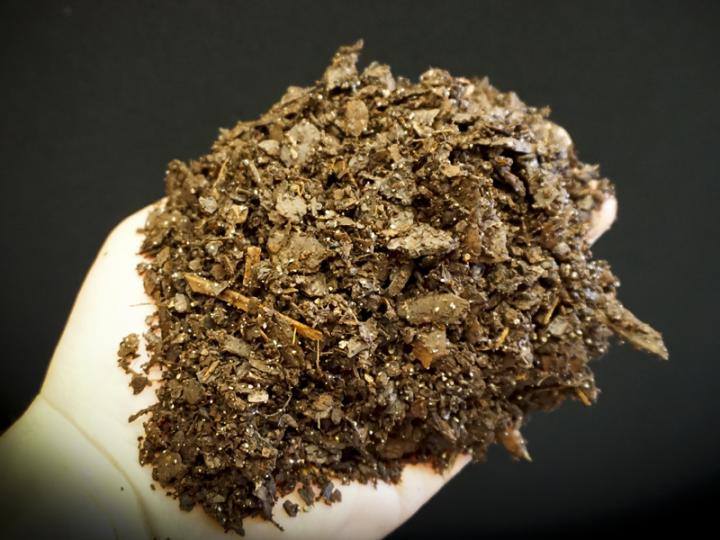
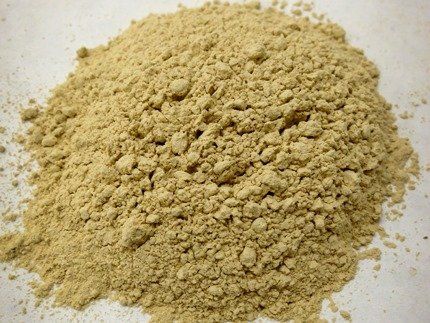
The additives work because of complex chemistry. Phosphate, a form of phosphorus that plants can use, has a negative charge. This means it likes to stick to things with a positive charge, such as dolomite and micronutrient fertilizer. In addition to improving plant growth, this research shows that these amendments help keep phosphorus in the pot.
Shreckhise and his team also studied how long dolomite and micronutrient fertilizers help to retain phosphorus in containers. Their next step is seeing if that retained phosphorus is in a form that plants can use.
Phosphorus runoff is becoming a bigger and bigger problem for the environment. Farms, including nurseries, must continue to combat it. "This research shows that we should continue exploring the use of amendments to help reduce the phosphorus that washes away from the containerized plants," says Shreckhise.
"This research was just the first step toward understanding the phosphorus chemistry occurring in these pots," he says. "Since plants were not involved in this study, we cannot make specific recommendations to growers based solely on this research. The general public should know that nursery growers routinely add these amendments to the potting medium. This is a step in the right direction to keeping the green industry 'green.'"
###
Read more about this work in Soil Science Society of America Journal. This research was partially funded by the Hatch Program of the National Institute of Food and Agriculture (including SCRI 2014- 51181-22372), the US Department of Agriculture, the Horticultural Research Institute, and the Virginia Nursery and Landscape Association.
Share This Post