

Oak Tree Butt Rot
WHO EVER SAID PLANT PATHOLOGISTS HAVE NO SENSE OF HUMOR, CLEARLY HAD NEVER MET A FOREST PATHOLOGIST. THE TERM STILL MAKES ME SNICKER A LITTLE.
All kidding aside, butt rot is a very real thing. In fact, it can be a scary, dangerous thing. Butt rot refers to the damage caused by wood decay fungi that decay the inner heartwood at the base of trunk. A tree can live with butt rot for many years but, over time, becomes more susceptible to windthrow from root or crown failure – hence the danger component. (See previous post on hazard trees.)
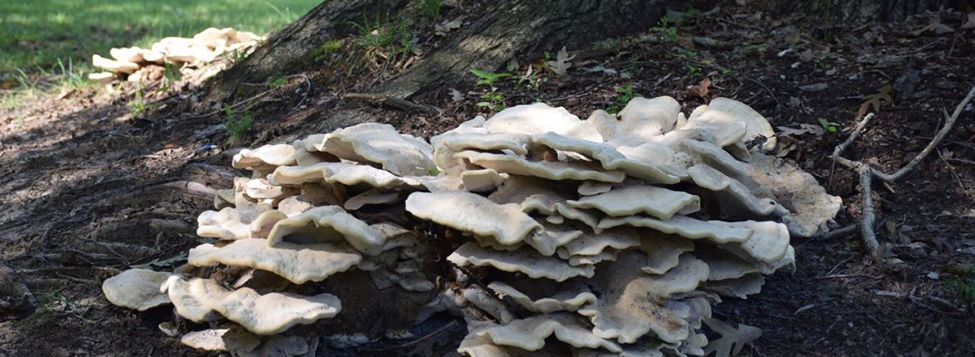
My neighbor’s giant oak tree has butt rot and has had it for years. In fact, it exploded this last week – it’s massive! This particular butt rot is caused by Inonotus dryadeus, the Latin translation for fibrous, ear-like fungi associated with oak.
I’m not sure what images come to your mind when you think of the term ‘butt rot,’ but I’ll bet it’s not too far from I. dryadeus, with its large, irregularly (some might say lumpy) shaped, pale yellow to brown colored, fuzzy conks (mushrooms), exuding amber-colored drops on their surface. I. dryadeus fits the description of butt rot to a ‘T.’ (and that rhymes with ‘B’ and that stands for…butt rot!) (I’m from Iowa – opportunities to reference Music Man are few and far between.)
The conks are attached at ground level to the base of the tree or to large roots – or both as in the case of my neighbor’s beloved tree – and crop up every year around this time, a sort of bellwether for the end of summer. By the end of fall, the conks turn dark brown to black but persist on the tree trunk/roots.
Many, many different fungi - not just I. dryadeus - can cause butt rot. Some of them are large and showy (Ganoderma applanatum, aka ‘artist’s conk’); while some are even edible (Laetiporus cincinnatus, aka ‘chicken of the woods’). Despite the diversity, the damage they inflict usually remains undetected until the appearance and recognition of fruiting bodies (conks/mushrooms) or the tree has been uprooted/snaps at the ground. Even if fruiting bodies are observed, it’s difficult to predict the full extent of the decay.
Unfortunately, there is no way to get rid of butt rot or stop it. The best thing to do is closely watch the tree for symptoms, such as progressive canopy dieback, undersized leaves, open cavities at the base of the tree, etc. Hopefully my neighbor will leave their tree alone for a while - the kids really love the swing attached to one of its branches – and just watch for signs of decline.
Not all fungi around a tree are bad; some are from mycorrhizal associations, which help trees! But if you suspect you’ve got some butt rot, please contact an arborist for help with diagnosis.
admin's blog
Share This Post